Home / Services / Burst Pipe Water Damage
Live person answering, 24 hours a dayBurst pipe water damage in Ocala, FL
A burst line does not drip, it pours, hundreds of gallons an hour until someone shuts the main. Find that valve, then call us to pull the water back out before it soaks into the framing.
A burst pipe pours until the valve is shut
Burst pipe water damage cleanup from Dry Ocala starts with the one thing that matters most in the first minutes: shutting the main water valve so the line stops pouring. Home supply lines run at roughly 40 to 80 psi. That pressure does not slow down on its own. A burst half-inch line can release hundreds of gallons an hour, and every one of those gallons is looking for the lowest point in your house.
The water itself starts clean. A supply line carries Category 1 water, the least harmful class. The problem is time. The longer it sits in carpet, drywall, and cabinets, the more it degrades toward Category 2, the gray-water class, as it picks up dirt and dissolves whatever it touches. So the loss has two clocks running: the volume clock while the pipe pours, and the contamination clock once it stops. We work both.
How we handle a burst pipe
- 1
Shut the source and confirm it stopped
If the main is still open, we close it and confirm the flow has actually stopped. Nothing else starts until the pipe is no longer pouring.
- 2
Find the hidden water with meters
Pipes behind walls hide water a towel never reaches. Moisture meters and thermal imaging trace where it ran, so wet cavities do not get sealed back up.
- 3
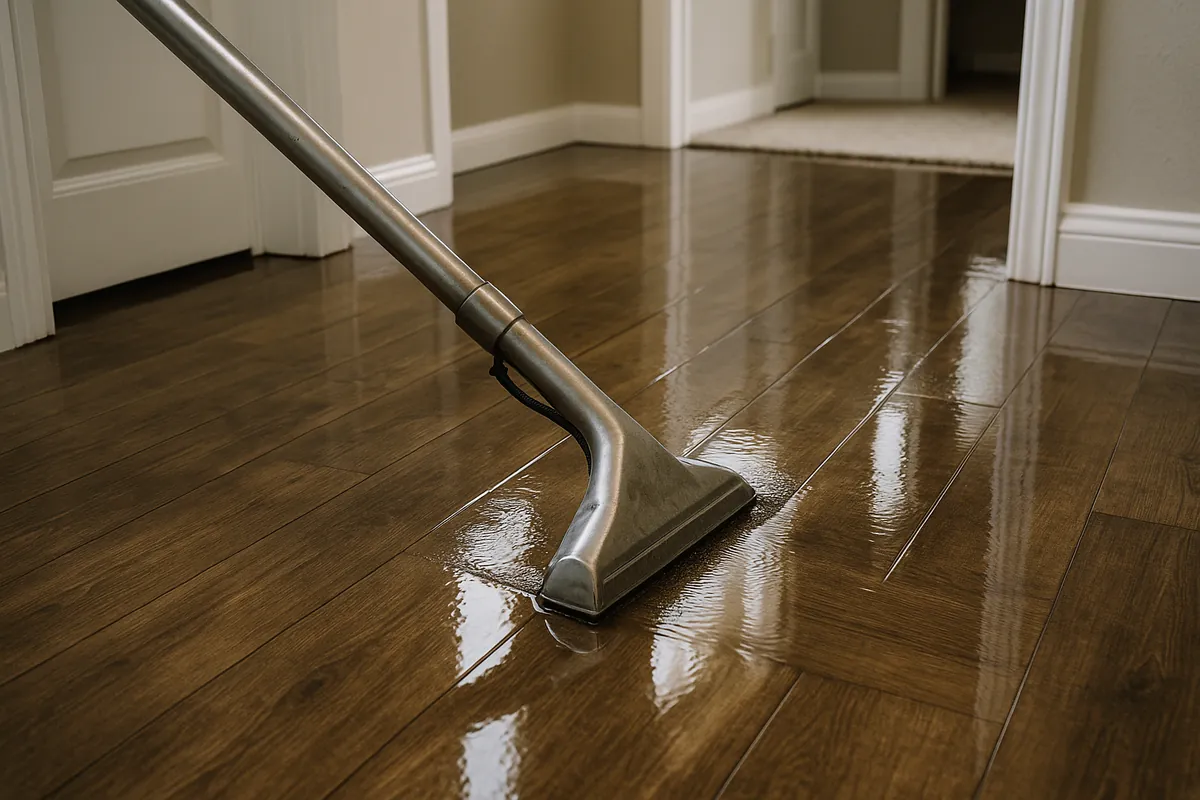
Extract the standing water
Extractors pull the pooled water out of floors, carpet, and pad before it wicks any further up the drywall.
- 4
Dry the structure
Air movers and dehumidifiers dry the framing and the wall cavities to a meter reading, not to the eye.
- 5
Repair the wall
Once the readings come back dry, we close up the drywall and finishes the water forced us to open.
Where Ocala pipes tend to fail
| Source | What happens | The tell |
|---|---|---|
| Slab leak under the concrete | A supply line under the slab fails and water rises through the floor | A warm or wet spot on the floor, or a water bill that jumped |
| Pipe inside a wall | A line behind the drywall splits and soaks the cavity | A stain or bubble on the wall and a meter that reads wet |
| Aging galvanized or polybutylene supply lines | Older Ocala homes still have these, and they fail with age | Repeat pinhole leaks and rust-colored water are early warnings |
| Hard-freeze burst | A rare January cold snap freezes unprotected outdoor, attic, and exterior-wall pipes | No water at the tap after a freezing night, then flooding on the thaw |
If the water came from a washing machine hose, dishwasher, or water heater instead of a supply line, see appliance leak cleanup. Once the source is off, water extraction is the step that pulls the standing water back out fast. If it soaked a ceiling below, ceiling water damage covers that.
Burst pipe questions
How much water does a burst pipe release?
A lot, and fast. Home supply lines run at roughly 40 to 80 psi, so a burst line pours continuously until the main valve is shut. A half-inch line can release hundreds of gallons an hour, which is why shutting the source in the first minutes decides how big the loss gets.
Where is my main water shutoff valve?
In Ocala homes it is usually where the main line enters the house, near an outside wall, in a garage, or at the meter box by the street. Find it and test it before you ever need it. Shutting that one valve stops a burst line pouring hundreds of gallons an hour.
Is a burst pipe covered by insurance?
A sudden accidental pipe burst is usually covered by homeowners insurance. Long-term seepage from a slow leak often is not, because insurers treat gradual damage as a maintenance issue. We document whether the loss was sudden and where the water traveled before any work begins.
Do you find the water hidden inside the walls?
Yes. Pipes behind walls and slab leaks under the concrete hide water a towel never reaches. We use moisture meters and thermal imaging to map it, then dry the cavity out. Water left inside a wall is what rots framing and grows mold weeks later. See water extraction.
Often part of a burst pipe job
Every minute is more gallons on the floor
Shut the main, then call. A licensed crew pulls the water out and dries the walls before the mold clock starts.
Call (352) 696-8100