Extraction is what stops the damage from spreading
Water extraction is the removal of standing water from your home before it soaks deeper into the structure. It is the first thing a restoration crew does and the single step that decides how big your repair gets. A gallon of water weighs about 8.3 pounds, and every gallon that sits keeps pushing into carpet pad, subfloor, and the bottom of your drywall. Pull it out early and you dry a floor. Leave it and you replace one.
People often think the water is gone because the surface looks dry. It rarely is. Carpet pad holds water like a sponge, and gallons hide in wall cavities and under floating floors where a towel never reaches. That is why we extract with commercial equipment and confirm the result with a moisture meter, not with our eyes.
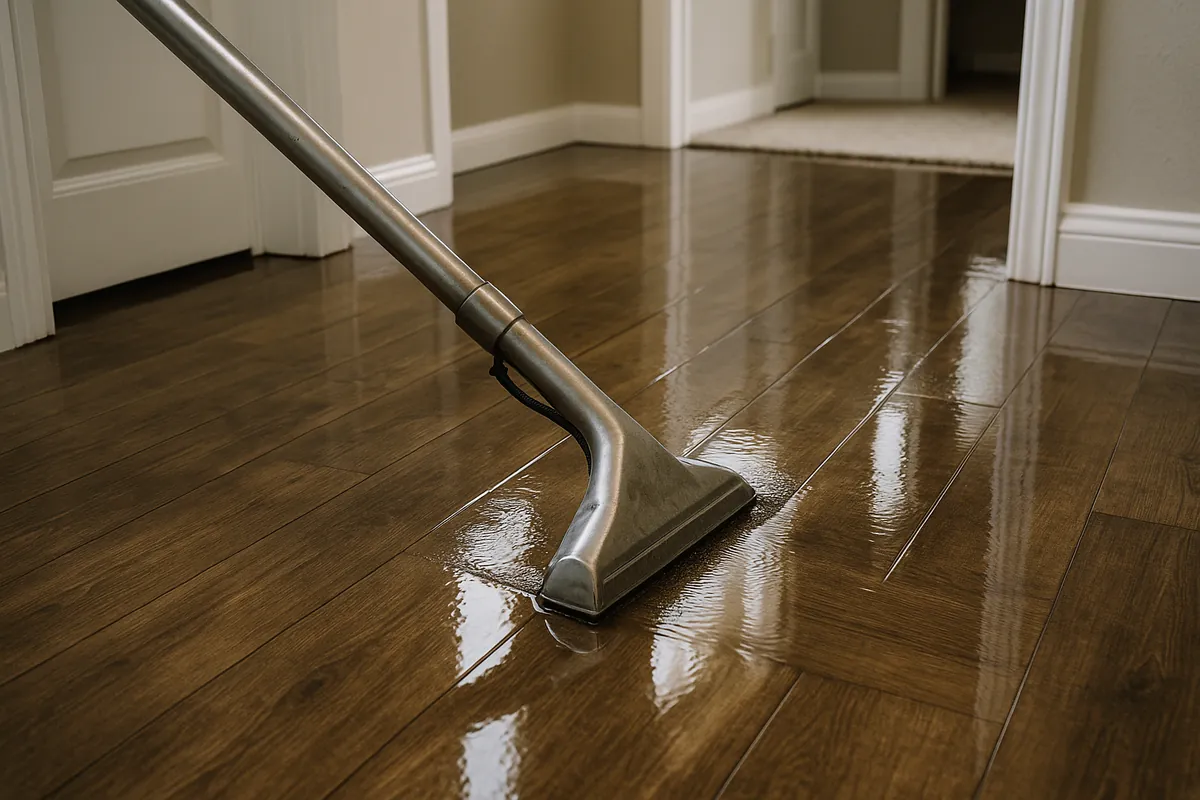
How we extract standing water
- 1
Map the water first
We find the standing water and the hidden water with moisture meters, so we pull from every wet area, not just the visible puddle.
- 2
Pull the surface water
Truck-mounted units move high volume quickly. For tight spots and upper floors we use portable extractors that reach where a truck line will not.
- 3
Deep-extract the pad and subfloor
Weighted extraction tools press water up out of carpet pad and off the subfloor, so the drying stage starts from as dry a point as possible.
- 4
Confirm, then dry
We re-check readings to prove the standing water is gone, then set air movers and dehumidifiers for the drying phase.
Which extractor fits the job
| Situation | What we use | Why |
|---|---|---|
| Large flooded ground floor | Truck-mounted extractor | Highest volume, fastest removal, keeps the machine outside |
| Second floor or tight room | Portable extractor | Carries upstairs and into closets and hallways a truck line cannot reach |
| Saturated carpet and pad | Weighted deep-extraction tool | Presses trapped water up out of the pad instead of leaving it to rot |
| Contaminated or sewage water | Extraction plus removal | Porous materials that touched black water come out rather than getting dried in place |
If the water is contaminated, extraction is only the start. See sewage and black water cleanup for how we handle that safely. Once the standing water is gone, structural drying pulls the rest of the moisture out of the framing and floors.
Water extraction questions
What is the difference between extraction and drying?
Extraction pulls out the standing water and the water trapped in carpet and pad. Drying removes the moisture left in the structure afterward. Extraction happens first and fast, because a gallon of water weighs about 8.3 pounds and keeps spreading until it is removed.
How fast should standing water be extracted?
Within the first few hours, ideally the same day. Standing water wicks up drywall and soaks into subfloor by the hour, and mold can start within 24 to 48 hours. We answer 24/7 and dispatch the nearest crew so extraction starts as soon as possible.
Can you extract carpet without pulling it up?
Often yes, when the water is clean and we reach it fast. Deep-extraction tools pull water through the carpet and pad in place. If the pad is saturated past saving or the water is contaminated, we remove the pad so the floor can dry properly.
The water already looks gone. Do I still need extraction?
Usually yes. Surface water disappears while gallons stay trapped in pad, wall cavities, and subfloor. We confirm with moisture meters, because the water you cannot see is what rots framing and grows mold later. See structural drying.
What comes before and after extraction
Every hour, the water sinks deeper
Extraction is the one part you can still get ahead of. Call now and we start pulling it out today.
Call (352) 696-8100