Home / Services / Roof Leak Water Damage
Live person answering, 24 hours a dayRoof leak water damage in Ocala, FL
The ceiling stain is almost never under the actual leak. Roof water runs the rafters first, so the real job is finding where it got in, then drying the attic and ceiling it soaked on the way down.
Roof water travels before it shows
Roof leak water damage cleanup from Dry Ocala is the drying and interior restoration we do after a roof leak soaks the attic and ceiling of a home in Ocala or Marion County. Roof water usually enters at a failed shingle, a cracked flashing, or a dried-out vent boot. From there it runs down the roof deck and along the rafters before it finally drips through and shows as a ceiling stain, often several feet from the real entry point. That is why finding the true entry point is the hard part of the job, and why chasing the stain alone leaves the leak still open.
Above that ceiling, the damage compounds. Wet attic insulation loses its R-value, stays wet, gets heavy, and grows mold. Florida sun and UV age asphalt shingles faster than in northern climates, so Ocala roofs give up their weak points sooner than a homeowner expects. Left alone, a small vent-boot leak quietly ruins the insulation and the ceiling below it over a few rainy weeks.
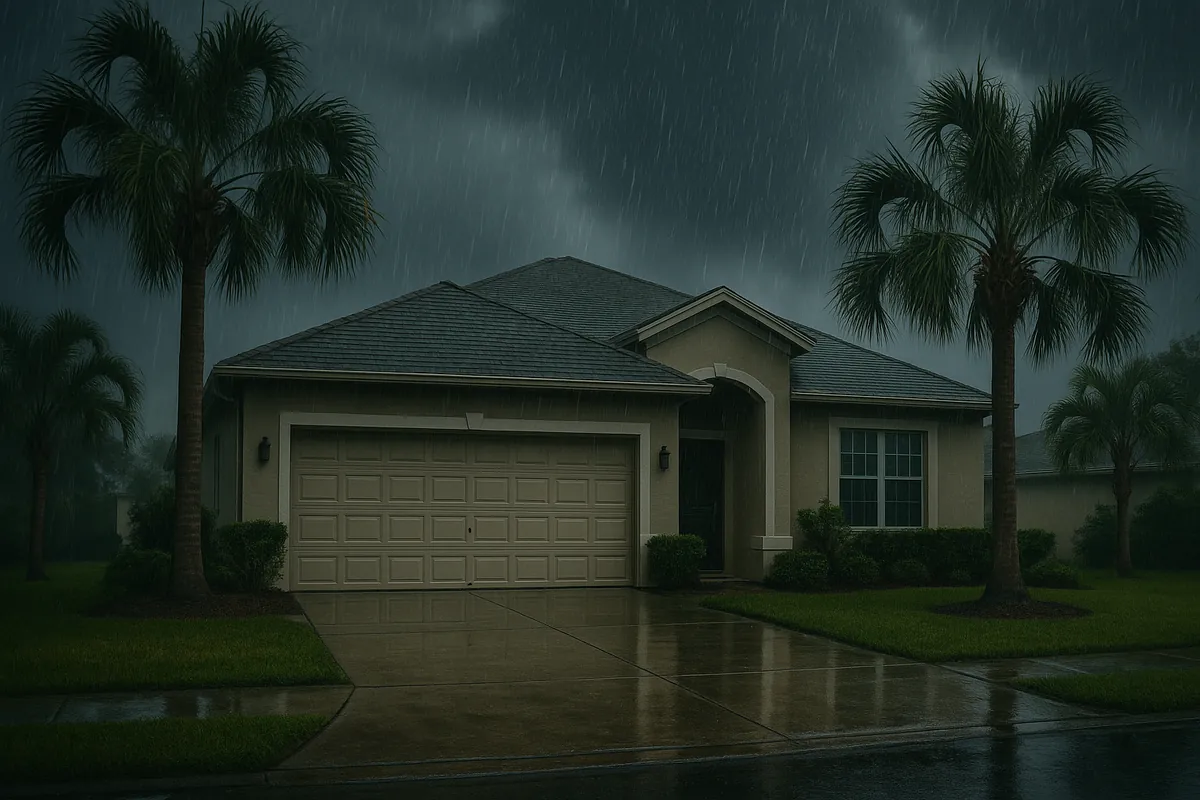
What we do, and what a roofer does
Here is the honest split, because it saves you time and money to know it up front. Dry Ocala handles the interior water damage: drying the attic, the insulation, and the ceiling, and restoring the inside. A roof shingle repair itself is roofing trade work. We can install a temporary tarp to stop active intrusion, but we do not reroof, and we tell you straight which part is ours and which belongs to a roofer. You get one crew handling the water and a clear handoff for the shingles, not a runaround.
How we handle a roof leak
- 1
Locate the entry point
We trace the stain back up the rafters to the failed shingle, flashing, or vent boot that actually let the water in, not just the spot where it dripped through.
- 2
Tarp to stop active water
A temporary tarp closes the opening so no more rain gets in while the roofer schedules the permanent repair.
- 3
Remove the wet insulation
Soaked batt insulation is heavy, dead as an insulator, and a mold risk, so the saturated material comes out.
- 4
Dry the attic and ceiling cavity
Air movers and dehumidifiers dry the framing, decking, and ceiling cavity to a meter reading, not to the eye.
- 5
Treat, then coordinate the interior repair
We apply antimicrobial treatment and rebuild the interior ceiling and finishes, and point you to the roofer for the shingle work.
Where Ocala roofs tend to let water in
| Entry point | Why it fails here | What it soaks inside |
|---|---|---|
| Failed or lifted shingle | Florida sun and UV age asphalt shingles faster than northern climates | Roof deck, then attic insulation and the ceiling below |
| Cracked flashing | Metal around chimneys and valleys separates and lets rain slip past | The framing along the roof valley and the wall it drains toward |
| Dried-out vent boot | The rubber collar around a plumbing vent cracks with age and heat | The attic directly below and the ceiling under the vent |
| Wet attic insulation | Any of the above soaks the batts, which then stay wet | Lost R-value, heavy sagging batts, and mold if left in place |
If the leak followed a storm that opened the roof, see storm damage cleanup for how insurance treats a sudden event. When the water dropped through and stained the room below, ceiling water damage covers that part, and structural drying is how we pull the moisture back out of the attic framing.
Roof leak questions
How do I tell a roof leak from a plumbing leak?
Timing and location. Roof leaks tend to follow the rain and show near exterior walls or on the ceiling, often several feet from the real entry point. Plumbing leaks are steady in dry weather and show near baths and kitchens or above them. We confirm the source with meters before opening anything.
Can you tarp it, and do you fix the roof itself?
We install a temporary tarp to stop active water and we restore the interior: drying the attic, insulation, and ceiling. The shingle or flashing repair itself is roofing trade work, and we tell you straight which part is ours and which is the roofer's. We do not reroof.
Will wet attic insulation dry, or does it need removal?
Soaked batt insulation is usually removed. Once it is saturated it loses its R-value, stays wet for a long time, gets heavy, and grows mold. Drying it in place rarely works. We pull the wet batts, dry the framing and decking, then the cavity is ready for new insulation.
Is roof leak damage covered by insurance?
It depends on the cause. Sudden storm damage that opened the roof is often covered, while a leak from a worn-out roof neglected over years is frequently denied as a maintenance issue. Florida sun ages shingles fast, so document the event. See storm damage cleanup.
Often part of a roof leak job
The insulation stays wet until someone dries it
Find the leak, tarp it, dry the attic. Call now and a licensed crew handles the interior while you line up the roofer.
Call (352) 696-8100