Wet drywall hides the water line above where you can see it
Wet drywall removal from Dry Ocala takes out the water-damaged section of your walls, the flood cut, so the cavity behind it can dry, in Ocala and Marion County homes. Drywall is gypsum wrapped in paper, and it wicks water upward like a sponge. That means the real wet line inside the wall sits higher than the water that pooled on the floor. Cut only to the visible line and you leave a wet strip behind the new board, where it quietly grows mold.
Left in place, wet drywall crumbles, loses its strength, and grows mold on its paper facing within days. Removing the wet section does two jobs at once: it takes out the ruined material, and it opens the wall cavity so the framing and any wet insulation behind it can finally dry. An open, drying wall finishes days faster than a sealed, damp one.
How we cut and dry a wet wall
- 1
Measure how high moisture wicked
A moisture meter shows how far the water climbed inside the wall. That reading, not the mark on the floor, tells us where the wet drywall really ends.
- 2
Mark the flood-cut line
We mark a straight cut 12 to 24 inches above the visible water line, higher when the water was contaminated, so the cut lands on dry gypsum.
- 3
Remove the wet drywall and insulation
The wet section comes out, and so does any wet insulation behind it. Both hold water and slow the whole job if left in the wall.
- 4
Dry the open cavity
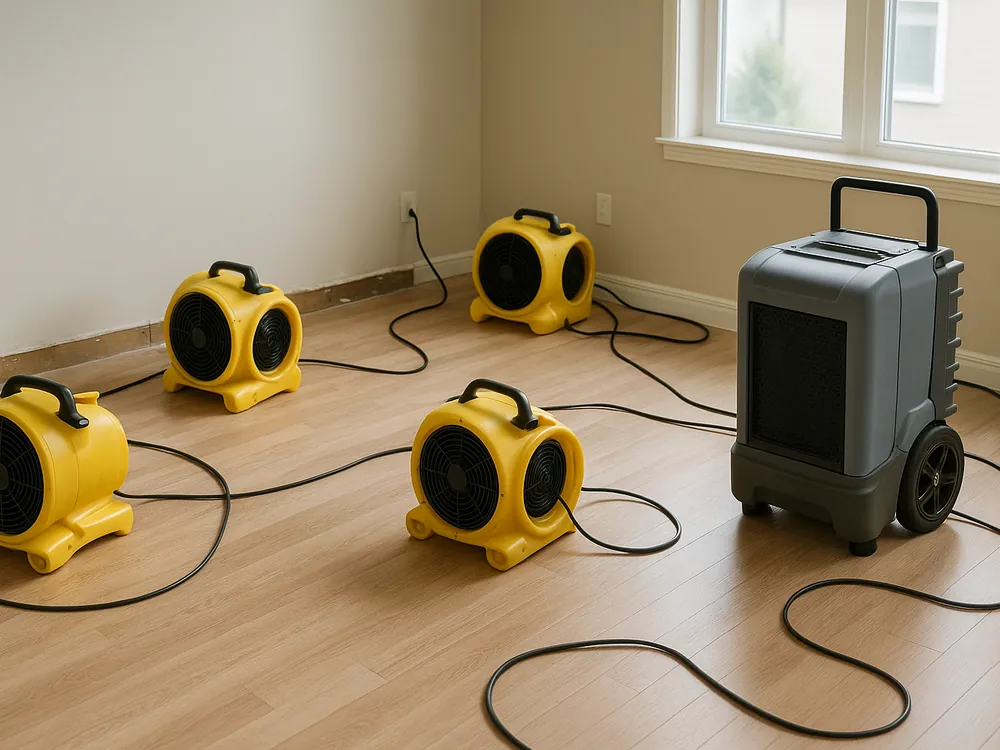
With the wall open, air movers and dehumidifiers dry the framing and cavity down to a verified meter reading.
- 5
Leave it ready for new drywall
The dried cavity is left clean and open, ready for fresh insulation and drywall when the repair goes back in.
Why the cut goes where it goes
A flood cut is a decision, not a default. Here is what drives it.
The wet line is higher than it looks
Gypsum wicks water up the wall, so we meter the height and cut 12 to 24 inches above the floor water line to land on dry board.
Cutting opens the cavity
Removing the wet drywall exposes soaked insulation and framing so both can dry, which shortens the total drying time.
Clean water can skip the cut
Caught fast on clean water, drywall can dry in place through small cavity-drying holes. Contaminated Category 3 drywall always comes out.
The flood cut is one stage of a larger job. It runs with whole-room structural drying so the exposed cavity actually reaches dry, and it hands off to water damage repair once the framing meters out. If the wall sat wet long enough to grow visible mold, mold remediation handles containment and removal before the wall gets closed back up.
Wet drywall and flood cut questions
What is a flood cut?
A flood cut is a straight horizontal cut that removes the wet section of a wall, made roughly 12 to 24 inches above the visible water line. Drywall wicks water upward like a sponge, so the wet line inside the wall sits higher than the water on the floor. The cut gets above it.
Does wet drywall always need to be removed?
No. Drywall hit by clean water and caught fast can sometimes be dried in place using small cavity-drying holes instead of a full cut. But wet drywall crumbles, loses strength, and grows mold on its paper facing within days, so anything caught late or hit by dirty water comes out.
How high do you cut the drywall?
Roughly 12 to 24 inches above the visible water line, and higher when the water was contaminated. We measure how far moisture wicked up the wall with a meter first, then mark the line above it, so the cut lands on dry gypsum instead of leaving a wet strip behind the new board.
Can you dry drywall without cutting it?
Sometimes, with cavity drying. When the water was clean and caught fast, we drill small holes and push dry air into the wall cavity to dry the drywall and insulation in place. Contaminated, or Category 3, drywall never qualifies; it always comes out along with the wet insulation.
What surrounds a flood cut
Wet drywall does not dry behind the paint
It crumbles and molds while it looks fine from the room. Call now and we find the real wet line and open the wall today.
Call (352) 696-8100