Home / Services / Carpet & Flooring Drying
Live person answering, 24 hours a dayCarpet and flooring water damage drying in Ocala, FL
Whether your floor gets saved or torn out comes down to two things: how fast drying starts and how clean the water was. We dry the floor you have and replace only the part that cannot come back.
The floor decides the bill, and the clock decides the floor
Carpet and flooring water damage drying from Dry Ocala saves the floors it can and replaces only what it cannot, across Ocala and Marion County. Whether a floor survives depends on how fast drying starts and how clean the water was. Start within hours on a clean-water loss and much of the floor stays. Wait a few days, or let contaminated water sit, and more of it has to come out. The material under your feet is often the biggest single line on a water damage bill, so this is where fast action pays off most.
Every flooring type behaves differently when it gets wet, and treating them the same is how people lose floors they could have kept. Carpet is forgiving, hardwood is workable if you catch it early, laminate rarely survives, and tile shrugs it off while the water sneaks underneath. Below the surface, the subfloor is the layer that truly has to reach dry no matter what is on top of it.
How we dry a water-damaged floor
- 1
Assess the water and the material
We check how clean the water was and what each floor is made of. Both decide whether a material dries in place or comes out.
- 2
Deal with the pad first
Saturated carpet pad gets pulled and replaced. It holds water like a sponge and costs little, so replacing it beats fighting to dry it.
- 3
Set floor-drying mats on hardwood
Specialized mats pull water up from below the boards, which saves hardwood that would otherwise have to be torn out.
- 4
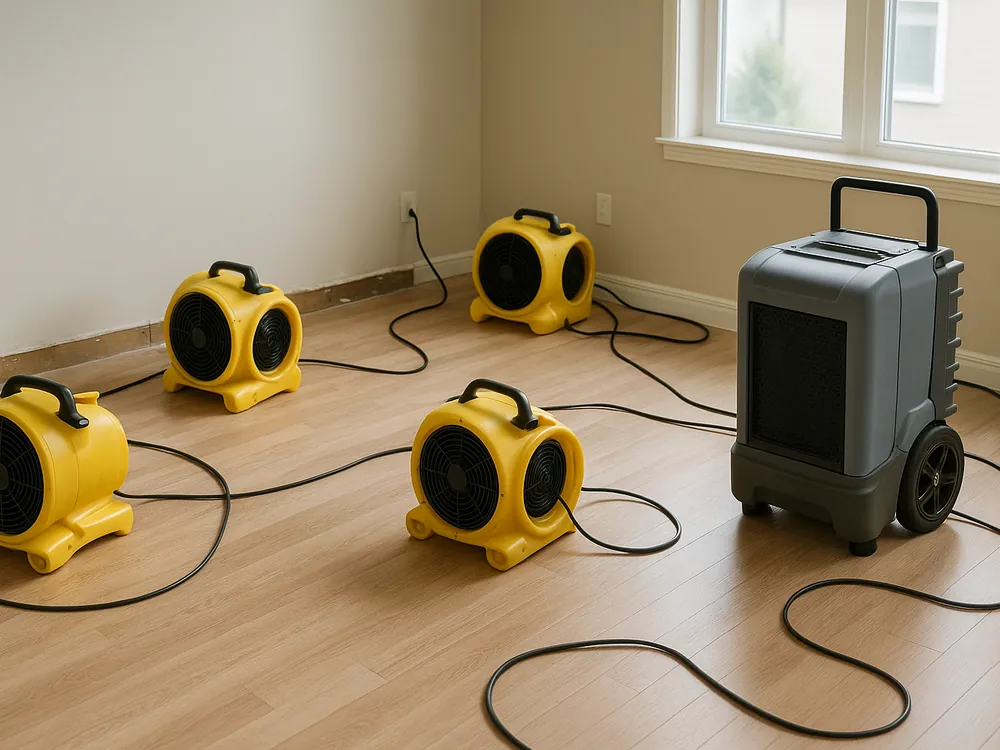
Run air movers and dehumidifiers
Air movers speed evaporation off the surface while dehumidifiers pull that moisture out of the air so it cannot re-wet the floor.
- 5
Monitor to a meter reading
We track moisture daily and dry until the material matches a dry standard, not until it merely feels dry to the hand.
- 6
Refinish or replace only what fails
Floors that reach dry stay put. Only the material that cannot recover gets replaced.
What each floor does when it gets wet
| Flooring type | Typical outcome | Method |
|---|---|---|
| Carpet | Often saved | Dried in place with air movers once the pad underneath is handled |
| Carpet pad | Usually replaced | Pulled and swapped, because it soaks up water like a sponge and is cheap |
| Hardwood | Often saved if drying starts fast | Floor-drying mats pull water up from below; cupping is watched and may need sanding |
| Laminate or engineered plank | Usually not salvageable | Swells at the seams once the core is wet, so it is replaced |
| Tile | Survives | Water under it and in the grout and subfloor is dried out |
| Subfloor | Must reach dry | Metered and dried under whatever floor stays, since it feeds mold if left wet |
Floor drying runs alongside whole-room structural drying and only starts after water extraction pulls the standing water off. When a floor cannot be saved, water damage repair replaces it once the subfloor beneath reads dry.
Carpet and flooring drying questions
Can my hardwood floors be saved after water damage?
Often, when drying starts fast and the water was clean. Hardwood cups first as the board edges swell and rise. Floor-drying mats pull the water up from below, saving boards that would otherwise be torn out. The longer the wood sits wet, the lower the odds of keeping it.
Do you have to pull up the carpet?
Usually not the carpet, but almost always the pad. The carpet face can often be dried in place, while the pad underneath holds water like a sponge and is inexpensive to replace, so pulling it beats spending days trying to dry it out.
Will cupped hardwood flatten back out?
Sometimes. With controlled drying, cupping from a fast, clean-water soak often relaxes back toward flat as the boards release moisture evenly. Deeper or slower damage can need a light sanding to finish level. We dry to a meter reading before anyone decides to refinish.
What about laminate and engineered plank floors?
Usually not salvageable. Laminate and engineered planks swell at the seams once water reaches the core, and that swelling does not reverse. Tile is the opposite: it survives, but water gets under it and into the grout and subfloor, which still has to be dried.
The work around your floors
Every hour wet is a floor closer to gone
Hardwood cups, pad rots, seams swell. Call now and we start drying today, while the floor can still be saved.
Call (352) 696-8100