Home / Services / Storm Damage Cleanup
Live person answering, 24 hours a dayStorm damage water cleanup in Ocala, FL
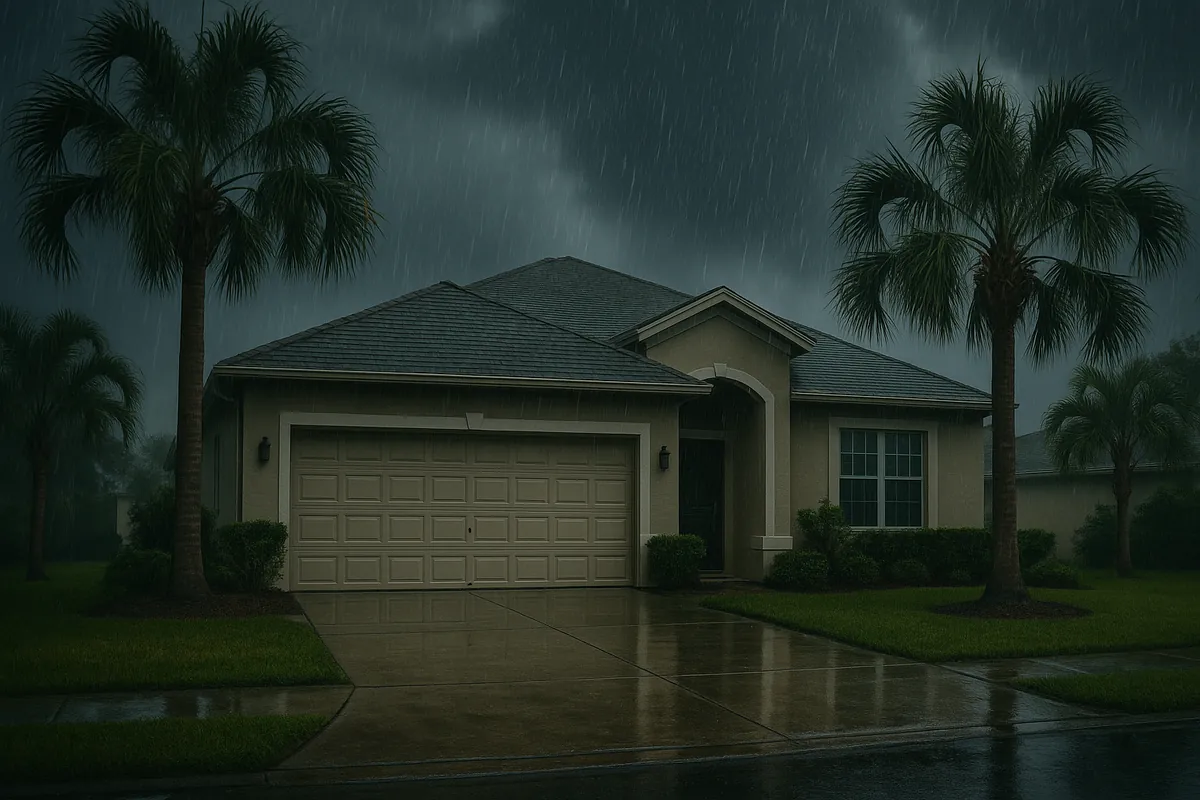
A summer storm finds every weak point on your roof. Once wind-driven rain gets under the shingles, the first job is closing the opening, then pulling the water back out before it molds.
How a storm gets water inside an Ocala home
Storm damage water cleanup from Dry Ocala is the safety check, emergency tarping, extraction, and drying we do after a storm forces water into a home in Ocala or Marion County. Atlantic hurricane season runs June 1 to November 30, but the bigger year-round threat here is the ordinary afternoon storm. Central Florida sits under daily summer thunderstorms, and their wind drives rain sideways: up under shingles, in through soffits and roof vents, and around window and door frames that a calm rain never reaches.
Marion County is inland, so the water we deal with is rarely coastal surge. It is wind-driven rain and, in low areas, river and creek flooding after the ground gives up taking any more. That distinction changes the job. Surge is a coastal problem. Here, the water usually comes down through the roof and the walls, which means finding the opening matters as much as removing the water.
How we handle a storm loss
- 1
Hazard and safety check
Before anyone goes in, we look for downed power lines, gas, and storm-weakened structure. A wet ceiling holding water can come down, and a live line in standing water is deadly. Safety clears first.
- 2
Stop the water still getting in
Emergency roof tarping and board-up close the opening the storm made. This is the step that stops the loss from growing while a roofer schedules the permanent repair.
- 3
Extract the standing water
Pumps and extractors pull the storm water out of floors, carpet, and the wall cavities it ran into.
- 4
Discard the contaminated porous materials
Storm water that crossed the ground is Category 3, the contaminated class. Soaked carpet pad, insulation, and swollen drywall usually come out rather than getting sealed up wet.
- 5
Dry the structure
Air movers and dehumidifiers pull the rest of the moisture out of the framing and floors to a meter reading, so nothing molds behind the wall.
Where storm water gets in
| Entry point | How the storm uses it | What it soaks |
|---|---|---|
| Under the shingles | Wind lifts shingle edges and forces rain up beneath them | Roof deck, attic insulation, ceiling below |
| Soffits and roof vents | Sideways rain blows straight into the vent openings | Attic and the top of interior walls |
| Window and door frames | Pressure pushes water past seals a calm rain never tests | Sills, drywall, flooring below the opening |
| Ground-level flooding | Creek and river rise or runoff the ground cannot absorb | Floors and lower walls, as contaminated Category 3 water |
If the storm water came up through the ground rather than down through the roof, the job leans toward flood cleanup and its contamination protocols. Once the opening is tarped and the water is out, water damage restoration carries the job through drying and rebuilding what the storm ruined.
Storm damage questions
Does insurance cover wind-driven rain damage?
Often yes. When wind creates the opening, a lifted shingle or a broken window, and rain enters through it, homeowners policies commonly cover the interior water damage. Rising ground flood is a separate NFIP policy. We document the storm opening and the damage before any work starts.
Should I tarp the roof myself?
No. Storm roofs are slick, often structurally weakened, and downed power lines can hide in the debris. Leave heights and live electrical to a crew with fall protection. We handle emergency tarping and board-up, usually the same day, so more water stops getting in safely.
What counts as storm damage versus a normal leak?
Storm damage is a sudden opening a specific event made: wind lifting shingles, rain forced under soffits and around window frames, or a limb through the roof. A normal leak is slow wear over months. That distinction matters because insurance treats a sudden storm event very differently from gradual failure.
How fast should cleanup start?
The same day when possible. Storm water is contaminated Category 3, and mold can start within 24 to 48 hours in Florida humidity. Every hour the opening stays uncovered, more rain gets in. We answer 24/7 and dispatch the nearest crew to stop the intrusion first. See water damage restoration.
Often part of a storm job
The opening is still letting rain in
Tarping is the part you can still get ahead of tonight. Call now and a licensed crew stops the water and starts the cleanup.
Call (352) 696-8100